Terraform Certification: Comprehensive Guide (2026)
Terraform has quickly become one of the most sought-after Infrastructure as Code (IaC) tools in modern cloud and DevOps practices. With enterprise-wide adoption, a structured terraform certification path can validate your skills, boost your career, and open doors to high-paying cloud engineering and DevOps roles. This article explores everything about Terraform certification, including its cost, available certifications, exam details, preparation pathways, and relevance in India and globally.
What Is Terraform Certification?
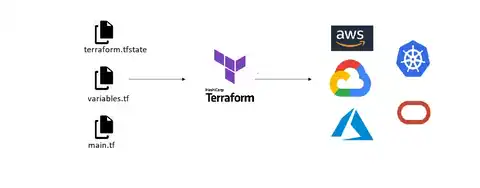
Terraform certification is a professional credential that validates your understanding, proficiency, and practical ability in using HashiCorp Terraform to provision, manage, and automate infrastructure. Terraform is an open-source IaC tool that lets you define infrastructure in declarative configuration files, version and automate deployments across multiple cloud environments.
The official certification tracks are managed by HashiCorp, the creators of Terraform, and the most recognized credential is the HashiCorp Certified: Terraform Associate. Other advanced Terraform-related certifications and preparatory courses exist that help learners target this official certification effectively.
Are There Certifications for Terraform?
Yes. There are official and widely recognized Terraform certification paths offered primarily through HashiCorp. The two most relevant certifications under the Terraform ecosystem are:
1. Terraform Associate (Official)
- Name: HashiCorp Certified: Terraform Associate
- Exam Code: Current version is 004 (originally 003)
- Who It’s For: Cloud engineers, DevOps professionals, solution architects, and anyone responsible for managing infrastructure using Terraform.
- Format: Online proctored, multiple-choice exam
- Duration: 60 minutes
- Purpose: Validates foundational knowledge of Terraform—core workflows, configuration, providers, modules, state management, and more.
- Credential Expiration: 2 years
- Prerequisites: None required, but hands-on experience is strongly recommended.
2. Terraform Authoring and Operations Professional (Advanced)
Beyond the Associate level, HashiCorp offers a more advanced Terraform Authoring and Operations Professional certification. This requires deeper expertise, including advanced production workflows, dynamic configuration, module writing, and collaborative infrastructure automation practices.
Other Paths and Mentorship Opportunities
Platforms like MentorCruise also list Terraform certifications and coaching paths. These are not official HashiCorp certifications but can help learners prepare for exams and grow real-world expertise with expert guidance.
Terraform Certification List
Here’s a snapshot of the core terraform certification list you should consider:
- HashiCorp Certified: Terraform Associate (004)
- Terraform Authoring and Operations Professional
- Third-party training and preparatory courses from Udemy, Pluralsight, MentorCruise, and other learning platforms tailored to Terraform certification preparation.
The most universally recognized and valuable in the job market is the Terraform Associate certification, which is often a prerequisite for the Professional level.
Terraform Certification Path
A typical terraform certification path looks like this:
Learn Terraform Fundamentals
- Study Infrastructure as Code (IaC) concepts
- Understand Terraform CLI, HCL syntax, providers, and state files
- Study Infrastructure as Code (IaC) concepts
Hands-On Practice
- Build demo projects with AWS, Azure, GCP, or other cloud providers
- Manage Terraform workflows in a real or simulated environment
- Build demo projects with AWS, Azure, GCP, or other cloud providers
Enroll in Certification Prep Courses
- Courses like Terraform Beginner to Advanced on Udemy provide structured preparation aligned with the official exam objectives.
Take Official Certification Exam
- Schedule and complete the Terraform Associate certification exam online
Recertify or Advance to Professional Level
- Renew credentials every 2 years or progress to the Terraform Authoring and Operations Professional exam.
This well-defined path ensures a strong balance between theory, hands-on skills, and validated credentialing.
Terraform Certification Exam
The Terraform certification exam is designed to gauge your practical understanding of Terraform concepts at scale.
Key Exam Details
- Format: Multiple choice, proctored online
- Duration: 60 minutes
- Number of Questions: Typically 57–60
- Passing Score: Around 70% or higher
- Delivery: Remote, supervised by a testing partner
- Language: English
- Validity: Certification is valid for 2 years after passing.
The exam tests your competence in understanding IaC, Terraform configuration, workflows (init, plan, apply, destroy), modules, state management, and best practices.
Does Terraform Cost Money?
The Terraform tool itself is open-source and free to use for most common infrastructure tasks. You can download and install Terraform at no cost and begin building infrastructure as code immediately. However:
- Official Certification Cost: The exam fee for the Terraform Associate certification is not free.
- Training Courses: Third-party preparatory courses generally cost money unless offered free by specific platforms or promotions.
- Cloud Infrastructure Costs: If you use cloud provider resources to practice, you may incur charges on AWS, Azure, or GCP.
Optional Mentorship or Coaching: Paid mentorship (e.g., MentorCruise) is optional but enhances preparation.
How Much Does Terraform Cert Cost?
Official Certification Cost (Global)
- Terraform Associate exam: Approximately $70.50 USD plus applicable taxes.
This cost can vary slightly due to currency exchange, platform fees, and taxes depending on your region.
Terraform Certification Cost in India
Pricing in India is typically higher when converted due to regional tax and currency differences. Practical exam registrations have been reported around ₹20,000 INR (subject to changes and exchange rates).
What Does This Cost Cover?
- One proctored exam attempt
- Official certification badge upon passing
- Credential valid for two years
Retake fees are generally not included for free unless otherwise specified in promotional periods.
Terraform Certification Free Options
There are no official free Terraform certification exams by HashiCorp; however, you can still prepare for it using free and low-cost resources:
- Official Terraform documentation and tutorials (free learning materials).
- Open-source Terraform courses on YouTube and GitHub study guides.
- Community-driven Terraform practice repositories.
- Some learning platforms offer occasional free access periods or trial subscriptions.
These don’t waive the exam fee but can significantly reduce your preparation cost.
Why Pursue Terraform Certification?
The terraform certification name on your resume signals:
- Demonstrated expertise in one of the most widely used IaC tools
- Readiness for cloud and DevOps roles
- Better job prospects and potential salary growth
- Credibility with global employers recognizing HashiCorp credentials
With tools like Terraform increasingly central to cloud infrastructure automation workflows, this certification enhances both practical capability and professional credibility.
Who Should Take Terraform Certification?
Terraform certification is ideal for professionals who want to build a strong career in cloud computing and infrastructure automation. It is especially beneficial for:
- Cloud Engineers working with AWS, Azure, or GCP
- DevOps Engineers managing CI/CD pipelines
- System Administrators transitioning to cloud roles
- Software Developers interested in Infrastructure as Code (IaC)
- IT professionals aiming to upgrade their automation skills
Even beginners with basic cloud knowledge can start with the Terraform Associate certification and gradually move toward advanced certifications.
Career Opportunities After Terraform Certification
Terraform skills are in high demand across industries adopting cloud and DevOps practices. After earning a Terraform certification, you can explore roles such as:
- DevOps Engineer
- Cloud Engineer
- Site Reliability Engineer (SRE)
- Infrastructure Engineer
- Cloud Automation Specialist
Salary Insights (India & Global)
- Entry-level: ₹4–8 LPA
- Mid-level: ₹8–18 LPA
- Experienced professionals: ₹20+ LPA
Globally, certified Terraform professionals can earn between $90,000 to $150,000 annually, depending on experience and expertise.
With companies increasingly adopting Infrastructure as Code, Terraform-certified professionals gain a strong competitive edge in the job market.
Real-World Use Cases of Terraform
Terraform is widely used in real-world scenarios to automate and manage infrastructure efficiently. Some common use cases include:
- Multi-Cloud Deployment: Manage AWS, Azure, and Google Cloud using a single configuration
- Infrastructure Automation: Automatically provision servers, databases, and networking
- CI/CD Integration: Integrate Terraform with DevOps pipelines for continuous deployment
- Disaster Recovery: Quickly recreate infrastructure in case of failure
- Scalable Environments: Easily scale infrastructure up or down based on demand
These practical applications make Terraform a critical tool for modern IT teams.
Terraform vs Other Cloud Certifications
While certifications like AWS, Azure, and Google Cloud focus on platform-specific skills, Terraform stands out as a vendor-neutral tool.
| Feature | Terraform | AWS Certification | Azure Certification |
|---|---|---|---|
| Platform | Multi-cloud | AWS only | Azure only |
| Focus | Infrastructure as Code | Cloud services | Cloud services |
| Flexibility | High | Medium | Medium |
Combining Terraform with cloud certifications significantly boosts your career opportunities and makes you a versatile professional.
Terraform vs Other Cloud Certifications
Terraform certification has become a strategic credential for cloud practitioners and DevOps professionals worldwide. From understanding core Terraform concepts to mastering real-world infrastructure automation, the Terraform Associate certification provides a validated and respected benchmark of your skills. You can follow a clear certification path, plan your budget around Terraform certification cost, and leverage a mixture of paid and free resources to prepare effectively.
Whether you’re starting your cloud career or looking to upgrade your skill set, Terraform certification signals commitment, capability, and a competitive edge in the modern tech job market.
Is Terraform Certification Worth It?
One of the most common questions asked by aspiring DevOps and Cloud professionals is whether Terraform Certification is worth the investment. The answer depends on your career goals, but for most cloud engineers, the certification provides significant value.
Terraform has become one of the industry’s leading Infrastructure as Code (IaC) tools. Organizations using AWS, Microsoft Azure, Google Cloud Platform (GCP), Oracle Cloud, and VMware increasingly rely on Terraform to automate infrastructure deployment.
A Terraform certification demonstrates that you understand:
- Infrastructure as Code (IaC)
- Terraform CLI
- Terraform modules
- State management
- Providers
- Variables and outputs
- Workspaces
- Terraform Cloud basics
- Best practices for infrastructure automation
Many employers view Terraform certification as proof that a candidate understands cloud automation fundamentals. Although hands-on experience remains important, certification helps your resume stand out during hiring.
Can Beginners Learn Terraform?
Yes. Terraform is considered one of the easiest Infrastructure as Code tools for beginners.
If you already understand basic cloud concepts such as virtual machines, networking, storage, and IAM, learning Terraform becomes much easier.
A beginner should follow this learning path:
- Learn basic cloud concepts.
- Understand Infrastructure as Code.
- Install Terraform.
- Learn HashiCorp Configuration Language (HCL).
- Create simple infrastructure.
- Practice variables and outputs.
- Learn modules.
- Understand Terraform state.
- Use remote backends.
- Practice real-world cloud deployment projects.
Regular hands-on practice is more valuable than simply reading documentation.
How Long Does It Take to Prepare for Terraform Certification?
Preparation time varies depending on your experience.
| Experience Level | Estimated Preparation Time |
|---|---|
| Beginner | 6–8 weeks |
| Basic Cloud Knowledge | 3–5 weeks |
| DevOps Engineer | 2–3 weeks |
| Experienced Terraform User | 1–2 weeks |
Candidates should spend time performing practical labs instead of focusing only on theory. Building cloud infrastructure manually and then recreating it using Terraform provides excellent exam preparation. Community discussions also consistently recommend hands-on practice as the best way to prepare.
What Skills Will You Gain After Terraform Certification?
Preparation time varies depending on your experience.
| Experience Level | Estimated Preparation Time |
|---|---|
| Beginner | 6–8 weeks |
| Basic Cloud Knowledge | 3–5 weeks |
| DevOps Engineer | 2–3 weeks |
| Experienced Terraform User | 1–2 weeks |
Candidates should spend time performing practical labs instead of focusing only on theory. Building cloud infrastructure manually and then recreating it using Terraform provides excellent exam preparation. Community discussions also consistently recommend hands-on practice as the best way to prepare.
Which Job Roles Require Terraform Skills?
Terraform expertise is valuable across many cloud and DevOps roles, including:
- DevOps Engineer
- Cloud Engineer
- Site Reliability Engineer (SRE)
- Platform Engineer
- Infrastructure Engineer
- Cloud Consultant
- Solutions Architect
- Automation Engineer
- Kubernetes Administrator
- Cloud Operations Engineer
As organizations continue adopting Infrastructure as Code, Terraform has become a standard skill in many cloud-focused job descriptions.
Terraform Certification vs AWS CloudFormation
Many candidates wonder whether they should learn Terraform or AWS CloudFormation.
Terraform supports multiple cloud providers, while CloudFormation is designed specifically for AWS.
| Terraform | AWS CloudFormation |
|---|---|
| Multi-cloud support | AWS only |
| Open-source | AWS service |
| Reusable modules | AWS templates |
| Large provider ecosystem | Native AWS integration |
| Works with Azure, AWS, GCP and more | Limited to AWS |
For professionals working across multiple cloud platforms, Terraform generally offers greater flexibility.
Get upto 30% OFF on Exam Booking
Get 20% OFF On Fee
faq
Terraform certification is generally considered a beginner-to-intermediate level certification. Candidates with basic cloud knowledge and regular hands-on practice usually find the exam manageable. The most challenging topics are Terraform state management, modules, providers, workspaces, and infrastructure workflows.
No. Terraform uses HashiCorp Configuration Language (HCL), which is declarative rather than a traditional programming language. Basic scripting knowledge is helpful but not mandatory.
Yes. Terraform supports hundreds of providers, including AWS, Microsoft Azure, Google Cloud Platform (GCP), Oracle Cloud Infrastructure, VMware, Kubernetes, GitHub, GitLab, and many other services through its provider ecosystem.
Yes. Fresh graduates interested in Cloud Computing, DevOps, or Infrastructure Automation can pursue Terraform certification. Pairing it with certifications such as AWS Cloud Practitioner or Azure Fundamentals creates a stronger entry-level profile.
Yes. HashiCorp certifications are version-based and may require renewal or recertification over time as exam objectives are updated. Candidates should check the latest certification policy before scheduling an exam.
There are no mandatory prerequisites. However, understanding cloud computing, Linux basics, networking, Infrastructure as Code (IaC), and version control with Git will make learning Terraform much easier.
The best preparation strategy includes:
- Study the official exam objectives.
- Complete hands-on Terraform labs.
- Practice creating reusable modules.
- Learn state management and backends.
- Take multiple mock tests.
- Review common Terraform CLI commands.
- Understand providers, variables, outputs, and workspaces thoroughly
