Terraform Renewable: Complete Guide to Renew Your Existing HashiCorp Certifications
As Infrastructure as Code (IaC) continues to dominate modern cloud and DevOps ecosystems, Terraform has emerged as one of the most in-demand tools for automating infrastructure provisioning. With this growing demand, Terraform certification has become a valuable credential for cloud engineers, DevOps professionals, and infrastructure automation specialists.
However, certifications are not permanent. Understanding Terraform renewable policies, validity timelines, and renewal processes is critical if you want to maintain your professional credibility and stay aligned with the latest HashiCorp standards.
This guide explains everything you need to know about Terraform renewable, certification validity, renewal steps, salary prospects, beginner certifications, and recommended learning paths—while also helping you renew your existing HashiCorp Certifications efficiently.
What Is Terraform Renewable?
Terraform renewable refers to the process of renewing an existing HashiCorp Terraform certification before it expires. HashiCorp certifications are designed to validate up-to-date knowledge of their tools, meaning certified professionals must periodically renew credentials to demonstrate continued competency.
Terraform evolves rapidly with new providers, modules, workflows, and security practices. Certification renewal ensures that professionals stay aligned with current best practices rather than outdated concepts.
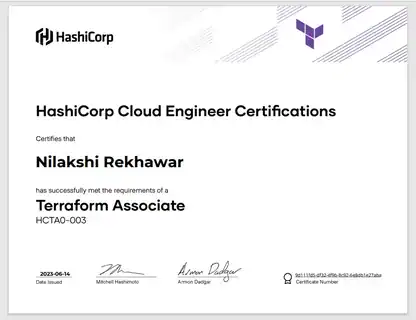
Renew Your Existing HashiCorp Certifications
HashiCorp has streamlined the renewal process for its certifications, including Terraform.
How Certification Renewal Works
If you already hold a Terraform certification, you can renew your existing HashiCorp Certifications by:
- Passing the latest version of the certification exam
- Renewing before the expiration date to avoid re-certification from scratch
- Following updated exam objectives provided by HashiCorp
Renewal does not require holding a higher-level certification. You simply retake the current exam version.
Why Renewal Is Important
- Keeps your credentials valid and verifiable
- Demonstrates ongoing professional development
- Aligns your skillset with updated Terraform features
- Maintains employer and recruiter trust
Failing to renew means your certification status becomes inactive, which may affect job prospects.
How Long Do Terraform Certs Last?
Terraform certifications issued by HashiCorp are valid for two years from the date of certification.
Key Validity Points
- Certification lifespan: 24 months
- Expiry date visible in your HashiCorp certification portal
- Renewal recommended before expiry, not after
- Expired certifications must be retaken as a new exam
Staying aware of certification timelines is essential when planning your Terraform renewable strategy.
Is the HashiCorp Terraform Certification Worth It?
Yes, the HashiCorp Terraform certification is absolutely worth it, especially for professionals working in cloud infrastructure, DevOps, and platform engineering.
Benefits of Terraform Certification
- Industry-recognized validation of Terraform skills
- Higher credibility in DevOps and cloud roles
- Competitive advantage in hiring and promotions
- Strong alignment with AWS, Azure, and GCP workflows
- Increased earning potential
Organizations adopting Infrastructure as Code often prioritize certified professionals for mission-critical infrastructure roles.
What Is the Salary of Terraform Certified Associate?
The salary of Terraform Certified Associate professionals varies by region, experience, and cloud expertise, but the certification consistently adds value to compensation packages.
Average Salary Insights
- Entry-level DevOps engineers: Competitive starting packages
- Mid-level cloud engineers: Significant salary uplift
- Senior infrastructure engineers: High demand across global markets
Terraform certification is especially valuable when combined with cloud certifications such as AWS, Azure, or GCP.
Which Terraform Certification Is Best for Beginners?
The HashiCorp Certified Terraform Associate is the best Terraform certification for beginners.
Why Terraform Associate Is Ideal for Beginners
- Designed for foundational IaC knowledge
- Covers core Terraform concepts
- No prior certification required
- Focuses on real-world use cases
- Widely accepted by employers
The HashiCorp Certified Terraform Associate 2026 version reflects modern workflows and updated best practices, making it ideal for new learners.
Terraform Associate Certification Syllabus
Understanding the Terraform Associate certification syllabus is crucial before enrolling in any training or renewal program.
Key Topics Covered
- Infrastructure as Code (IaC) fundamentals
- Terraform workflow (init, plan, apply)
- Providers and resources
- Variables and outputs
- State management
- Terraform Cloud and Enterprise basics
- Modules and reusability
- Security and best practices
This syllabus applies to both new candidates and professionals pursuing Terraform renewable.
Best Course for Terraform Associate Certification
Choosing the best course for Terraform Associate certification can significantly impact exam success and long-term understanding.
What to Look for in a Course
- Alignment with latest exam objectives
- Hands-on labs and real scenarios
- Updated for Terraform Associate 2026
- Practice exams and mock tests
- Clear explanation of state and modules
A structured Terraform Associate certification course helps both beginners and professionals renewing their credentials.
Terraform Certification Course Options
There are multiple formats available for a Terraform certification course, including:
- Self-paced online learning
- Instructor-led virtual classes
- Official HashiCorp Terraform Course
- Cloud-integrated DevOps programs
An official HashiCorp Terraform Course ensures accurate coverage of exam topics and best practices recommended by the creators of Terraform themselves.
Terraform Associate Certification Course for Renewal
Professionals preparing for Terraform renewable should consider refresher-focused courses that emphasize:
- Updated features and syntax changes
- New exam objectives
- Real-world troubleshooting
- Exam-oriented practice scenarios
Even experienced Terraform users benefit from structured revision before attempting renewal.
HashiCorp Certified Terraform Associate 2026: What’s New?
The HashiCorp Certified Terraform Associate 2025 exam includes:
- Enhanced focus on Terraform Cloud workflows
- Updated provider management practices
- Modern security and policy concepts
- Emphasis on scalable infrastructure design
Candidates pursuing Terraform renewable should always prepare using the latest exam version to avoid outdated content.
Why Terraform Renewable Matters for Career Growth
Failing to renew certifications can negatively impact professional growth, especially in fast-evolving DevOps environments.
Career Advantages of Renewal
- Maintains competitive edge
- Signals commitment to continuous learning
- Improves long-term employability
- Strengthens cloud and automation profiles
Many employers actively check certification validity during hiring or appraisal cycles.
How Terraform is Transforming Renewable Energy Infrastructure
Terraform is not just a DevOps tool—it is becoming a powerful solution for managing renewable energy infrastructure in a scalable, automated way. As the world shifts toward clean energy, organizations are increasingly adopting Infrastructure as Code (IaC) tools like Terraform to efficiently deploy and manage renewable systems such as solar farms, wind energy grids, and energy storage systems.
Why Terraform is Important in Renewable Energy
Renewable energy projects involve complex infrastructure, including cloud systems, IoT devices, and data monitoring platforms. Managing these manually can be time-consuming and error-prone. Terraform solves this problem by allowing engineers to define infrastructure using code, making deployment faster, consistent, and highly reliable.
With Terraform, companies can:
- Automate cloud infrastructure for renewable energy systems
- Manage large-scale solar and wind projects
- Ensure consistency across multiple environments
- Reduce human errors in deployment
This approach aligns perfectly with modern renewable energy companies that operate large-scale systems and require efficient infrastructure management.
Real-World Applications of Terraform in Renewable Projects
Many renewable energy companies operate large-scale distributed systems that require automation and monitoring. For example, large renewable operators manage wind, solar, and storage assets across regions to optimize performance and reduce emissions.
Terraform can be used in such scenarios to:
- Deploy cloud-based monitoring systems
- Manage data pipelines for energy analytics
- Automate infrastructure for smart grids
- Scale renewable projects globally
Benefits of Using Terraform for Renewable Infrastructure
Using Terraform in renewable energy projects provides several advantages:
- Scalability: Easily expand infrastructure as energy demand grows
- Cost Efficiency: Optimize resources and reduce operational costs
- Automation: Deploy infrastructure in minutes instead of days
- Consistency: Maintain the same setup across multiple regions
- Disaster Recovery: Quickly rebuild infrastructure using code
Future Scope of Terraform in Renewable Energy
The integration of cloud computing and renewable energy is rapidly growing. With increasing investments in clean energy worldwide, the demand for professionals who understand both Terraform and renewable systems is also rising.
Future trends include:
- Smart grids powered by cloud automation
- AI-driven renewable energy management
- Increased use of Infrastructure as Code in energy sectors
This makes Terraform a valuable skill for students and professionals looking to build a career in cloud computing, DevOps, and sustainable technology.
