Cisco CCNA Fees: Complete Guide to Cisco CCNA Certification Cost (2025)
The Cisco Certified Network Associate (CCNA) certification remains one of the most trusted and globally recognized credentials for aspiring network engineers. Whether you’re a beginner stepping into the world of networking or a working professional upgrading your skills, understanding the Cisco CCNA certification cost is essential for planning your IT career journey.
Beyond the exam fee itself, candidates should also consider additional expenses such as training courses, lab equipment, practice tests, and study materials. These resources help you build real-world networking skills and improve your chances of passing the exam on the first attempt. Many learners choose instructor-led training or online programs that offer hands-on labs, video lessons, and doubt-clearing support to make the preparation smoother.
As the IT industry continues to evolve with cloud computing, automation, cybersecurity, and advanced networking technologies, CCNA has grown into a foundational certification that opens doors to multiple career paths. Completing CCNA not only strengthens your technical understanding but also increases your value in the job market, helping you secure roles like network technician, support engineer, system administrator, or even pave the way for advanced certifications such as CCNP or specialist tracks.
What Is the Cisco CCNA Certification?
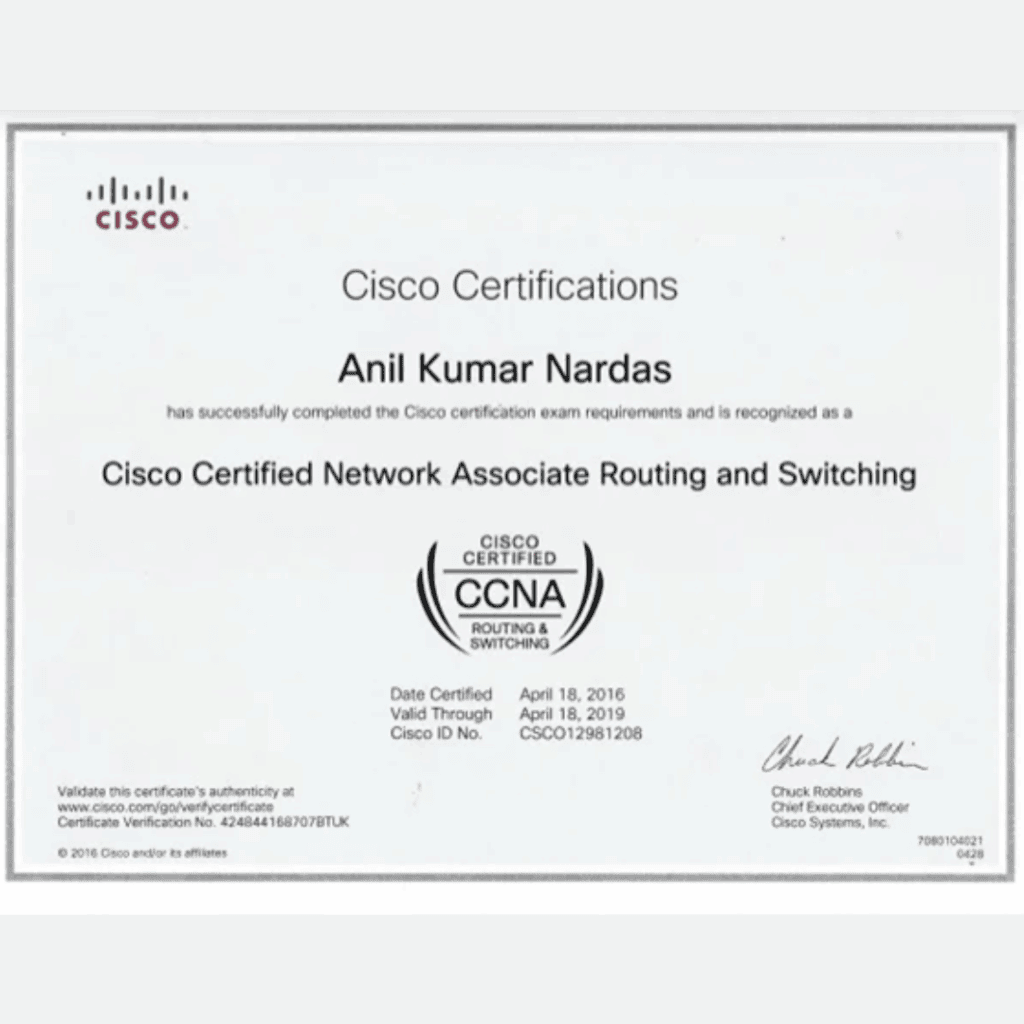
The CCNA is Cisco’s foundational-level networking certification, validating skills in network fundamentals, IP connectivity, IP services, automation, security, and network access. It is aligned with modern enterprise network roles and is often the first certification chosen by networking professionals.
The certification is earned by clearing Cisco Exam 200-301, which is a 120-minute examination available worldwide through Pearson VUE.
The exam tests your ability to work with real-world networking scenarios, making it important for candidates to build both theoretical knowledge and practical skills. Cisco regularly updates the exam to reflect current industry needs, so learners gain skills that match today’s enterprise environments, including cloud networking and network automation.
Many candidates prepare for the exam through structured training programs, self-paced courses, hands-on labs, or simulation tools like Packet Tracer and GNS3. These learning resources help you practice configuration, troubleshoot network issues, and understand how modern networks operate.
Breaking Down the Global CCNA Certification Cost
When building a budget for an international IT career, mapping out the total ccna certification cost is a critical first step. Cisco relies on a uniform global baseline price of $300 USD for the 200-301 exam voucher. However, the final checkout price you pay is rarely just a straight currency conversion.
Depending on where you register, your final ccna certification cost will fluctuate due to local value-added taxes (like GST in India or Australia, and VAT in the UK) alongside bank foreign transaction fees. While the base rate stays pegged to USD, dynamic exchange rates mean that international candidates must actively monitor currency performance to time their exam voucher purchases perfectly.
When building a budget for an international IT career, mapping out the total ccna certification cost is a critical first step. Cisco relies on a uniform global baseline price of $300 USD for the 200-301 exam voucher. However, the final checkout price you pay is rarely just a straight currency conversion.
Depending on where you register, your final ccna certification cost will fluctuate due to local value-added taxes (like GST in India or Australia, and VAT in the UK) alongside bank foreign transaction fees. While the base rate stays pegged to USD, dynamic exchange rates mean that international candidates must actively monitor currency performance to time their exam voucher purchases perfectly.
Cisco CCNA Fees
Before diving deeper, here is a quick overview of the Cisco CCNA certification cost globally:
|
Region |
Estimated CCNA Exam Cost |
|
India |
₹22,000 – ₹26,000 |
|
United States |
$300 |
|
United Kingdom |
£235 – £260 |
|
Philippines |
₱15,000 – ₱18,000 |
|
South Africa |
R4,500 – R5,500 |
|
Australia |
AUD 400 – AUD 450 |
These numbers vary slightly depending on local taxes, currency exchange rates, and test center pricing policies. The official Cisco website lists the global CCNA exam price as $300 USD, which converts differently across regions.
How Much Does It Cost for CCNA Certification?
The Cisco CCNA certification cost includes two major components:
✅ 1. CCNA Exam Fee
The official Cisco CCNA exam cost is:
$300 USD globally
This includes:
- Exam 200-301
- Pearson VUE registration
- Digital certificate upon passing
For country-wise estimates:
- Cisco CCNA certification cost in India: ₹22,000–₹26,000
- Cisco CCNA exam cost in UK: £235–£260
- Cisco CCNA exam cost in Philippines: ₱15,000–₱18,000
- Cisco CCNA exam cost South Africa: R4,500–R5,500
- Cisco CCNA exam cost Australia: AUD 400–AUD 450
These numbers make up the cisco ccna global exam cost, applicable for both online and offline testing.
✅ 2. CCNA Training Cost
The Cisco CCNA training cost varies depending on training providers and formats:
Mode of Training | Average Cost |
Instructor-led training | ₹15,000 – ₹40,000 (India) |
CCNA online self-paced courses | ₹5,000 – ₹15,000 |
Cisco official training | $800 – $1,200 globally |
Bootcamps | ₹30,000 – ₹60,000 |
The cisco ccna course cost includes lab access, study materials, practice tests, and trainer support.
How Training Modes Impact the Total CCNA Certification Cost
It is a common mistake for beginners to equate the ccna certification cost strictly to the price of the exam voucher. In reality, your preparation pathway dictates your overall financial investment. Let’s look at the true cost structure of the three main preparation paths globally:
-
The Self-Guided Track (Lowest Cost): If you opt for self-paced platforms like Udemy, Coursera, or free resources via the Cisco Networking Academy, your additional preparation expenses can be kept under $50 USD. This leaves your total ccna certification cost hovering right around the baseline $300 to $350 USD mark.
-
The Hybrid Online Track (Moderate Cost): Combining official Cisco press books with interactive, live-streamed bootcamps balances support with affordability. This route typically increases the final ccna certification cost to a range of $500 to $700 USD.
-
The Premium Institutional Track (Highest Cost): Enrolling in full-scale training academies that provide real physical hardware access, dedicated structural mentoring, and job placement assistance represents a larger upfront investment. This premium path pushes the total ccna certification cost to $900 to $1,500 USD globally.
Is CCNA Very Difficult?
The difficulty level of CCNA depends on your prior exposure to networking:
⭐ Moderate Difficulty
CCNA is not extremely hard, but it’s not easy either. It demands:
- Understanding of network fundamentals
- Ability to configure routers & switches
- Knowledge of IPv4/IPv6
- Problem-solving skills
- Basic network security
- Concepts of automation
Candidates with networking experience find it manageable, while complete beginners may need structured training.
Can I Get CCNA for Free?
No, the CCNA exam is not free, but you can reduce costs through:
✔ Free learning materials
Cisco offers free introductory resources like:
- Cisco Networking Academy
- YouTube tutorials
- Free labs (EVE-NG, GNS3, Packet Tracer)
✔ Scholarships & vouchers
Some Cisco partners and academies provide:
- Discount vouchers
- Student pricing
- CCNA scholarships
But the exam fee itself is mandatory and cannot be waived.
Is CCNA Still Worth It in 2025?
Absolutely — CCNA remains one of the most valuable IT certifications in 2025.
Here’s why:
✔ High demand for networking professionals
Companies across sectors rely on:
- Cloud networking
- Enterprise infrastructure
- Cybersecurity
- VOIP & wireless
✔ Salary growth
CCNA-certified professionals earn significantly higher than non-certified peers.
✔ Foundation for advanced Cisco certifications
Like:
- CCNP
- CCIE
- DevNet Associate
- CyberOps Associate
✔ Globally recognized credential
Accepted in over 100+ countries and across thousands of employers.
So yes — CCNA is still worth it in 2025, especially for freshers entering IT.
Cisco CCNA Exam Cost (Detailed Breakdown)
To ensure clarity about all supporting keywords, here is a breakdown of the Cisco CCNA exam cost in multiple countries:
- Cisco CCNA certification cost in India: ₹22,000–₹26,000
- Cisco CCNA exam cost in India (INR): ₹22,000+ GST
- Cisco CCNA exam cost UK: £235–£260
- Cisco CCNA exam cost Philippines: ₱15,000–₱18,000
- Cisco CCNA exam cost South Africa: R4,500–R5,500
Cisco CCNA exam cost Australia: AUD 400–450
Cisco CCNA Training Cost (Global Overview)
The training cost varies because institutions offer different formats:
1. Online self-paced programs
- Cost: ₹5,000–₹10,000
- Best for: Students with some networking basics
- Advantages: Affordable, flexible
2. Instructor-led online live classes
- Cost: ₹15,000–₹40,000
- Best for: Beginners
- Advantages: Real-time labs, interaction
3. Cisco official training
- Cost: $800–$1,200
- Best for: Corporate teams
Cisco CCNA Fees in India
This section includes your mandatory blog heading:
Cisco CCNA Fees in India
If you’re preparing for CCNA in India, here are the components:
1. CCNA Exam Fee (India)
₹22,000–₹26,000 depending on currency conversion.
2. CCNA Course Fees in India
- Beginner-level institutes: ₹10,000–₹20,000
- Premium academies: ₹20,000–₹40,000
- Advanced labs: ₹25,000–₹50,000
3. Additional expenses
- Study materials: ₹500–₹1,500
- Lab devices (if self-learning): Optional (₹0 using simulators)
The total CCNA certification cost in India generally ranges from:
₹30,000 – ₹60,000 (all inclusive)
Who Should Take the CCNA Certification?
CCNA is ideal for:
- Freshers starting an IT career
- Network support engineers
- System administrators
- IT technicians
- Cybersecurity beginners
- Anyone switching to networking
No degree or experience is officially required, but basic IT knowledge helps.
Benefits of CCNA Certification
✔ Higher salary potential
✔ Better job opportunities
✔ Networking fundamentals mastery
✔ Globally recognized credential
✔ Prerequisite for higher Cisco certifications
Complete Breakdown of Cisco CCNA Certification Cost (Realistic Budget Planning)
When planning for the Cisco CCNA certification cost, most candidates only consider the exam fee. However, the real investment goes beyond just paying for the test. To help you make a smart decision, here’s a realistic breakdown of how much you might actually spend depending on your learning approach.
1. Minimum Cost to Get CCNA Certified
If you are on a tight budget and prefer self-study, your total cost can be relatively low:
- Exam fee: ₹22,000 – ₹26,000
- Free study resources (YouTube, Cisco Networking Academy): ₹0
- Practice labs (Packet Tracer / GNS3): ₹0
👉 Total Estimated Cost: ₹22,000 – ₹26,000
This approach is ideal for disciplined learners but requires strong self-motivation and consistency.
2. (Average) Cost for Most Students
Most candidates choose a balanced approach with some paid training:
- Exam fee: ₹22,000 – ₹26,000
- Online course: ₹5,000 – ₹15,000
- Practice tests: ₹1,000 – ₹3,000
👉 Total Estimated Cost: ₹30,000 – ₹45,000
This is the most common investment range and provides a good mix of affordability and structured learning.
3. Premium Training Path (Best Support & Guidance)
If you opt for instructor-led training with labs and mentorship:
- Exam fee: ₹22,000 – ₹26,000
- Classroom/Live training: ₹20,000 – ₹50,000
- Study materials & mock tests: ₹2,000 – ₹5,000
👉 Total Estimated Cost: ₹45,000 – ₹75,000
This option is best for beginners who need hands-on support and guidance.
Hidden Costs You Should Know
Many candidates underestimate these additional expenses:
- Retake Fee: If you fail, you must pay the full exam fee again (~$300 globally)
- Practice Exams: Paid mock tests can improve success rate
- Time Investment: 2–4 months of preparation time
- Hardware (optional): Routers/switches if not using simulators
Planning for these ensures there are no surprises later.
Safeguarding the CCNA Certification Cost
Because the ccna certification cost requires a noticeable financial commitment, failing to pass on your first attempt is an expensive setback. Cisco enforces strict policies regarding exam retakes: there are no discounted second attempts, and you must wait a minimum of 5 calendar days before rescheduling.
If you fail, you must pay the full $300 USD fee plus taxes all over again, instantly doubling your out-of-pocket ccna certification cost. To minimize this risk, successful candidates heavily prioritize budgeting for high-quality mock test simulators like Boson ExSim or Pearson VUE practice tests. Spending a small amount on comprehensive practice exams before booking your official date acts as an insurance policy for your hard-earned money.
Cisco CCNA Worth the Cost?
Yes — the CCNA certification offers strong return on investment.
Career Opportunities After CCNA
- Network Engineer
- System Administrator
- Network Support Engineer
- IT Helpdesk Specialist
Salary Expectations (India)
- Freshers: ₹3 LPA – ₹6 LPA
- Experienced professionals: ₹6 LPA – ₹12+ LPA
With networking, cloud, and cybersecurity demand increasing, CCNA remains a valuable entry-level certification.
CCNA vs Other Certification Costs
Here’s how CCNA compares:
| Certification | Cost |
|---|---|
| CCNA | ~$300 |
| CompTIA Network+ | ~$358 |
| AWS Associate | ~$150 |
👉 CCNA offers better hands-on networking skills, making it more practical for infrastructure roles.
Tips to Reduce Cisco CCNA Certification Cost
- Use free tools like Packet Tracer
- Join study groups or forums
- Look for discount vouchers
- Avoid expensive hardware labs
- Start with free resources before buying courses
Why CCNA Certification Is Still Valuable in 2026
The demand for skilled networking professionals continues to grow as companies rely heavily on cloud computing, cybersecurity, remote connectivity, and enterprise networking infrastructure. The Cisco Certified Network Associate (CCNA) certification remains one of the most recognized entry-level networking certifications globally. According to multiple industry education sources, CCNA training covers essential networking concepts such as IP connectivity, network security, automation, and routing fundamentals.
CCNA certification is highly beneficial for students, freshers, system administrators, and IT professionals who want to build a strong foundation in networking technologies. Many employers consider CCNA certification a preferred qualification for networking-related job roles because it validates practical networking knowledge and troubleshooting skills.
With businesses adopting hybrid work models and advanced digital systems, networking professionals are needed in almost every industry including banking, healthcare, telecom, cloud computing, education, and IT services. This makes CCNA one of the most career-oriented certifications for beginners in technology
Skills You Learn During CCNA Training
A quality CCNA training program helps candidates gain both theoretical understanding and practical networking experience. Most CCNA courses include lab-based learning where students work with routers, switches, and network simulation tools.
Network Fundamentals
Students learn the basics of computer networking, including LAN, WAN, TCP/IP protocols, subnetting, and network topologies. These concepts form the core of modern IT infrastructure.
Routing and Switching
CCNA training covers routing protocols, VLANs, switching technologies, and network configuration. These are essential skills required for managing enterprise networks.
Network Security Basics
Security fundamentals such as firewalls, VPNs, access control, and device security are introduced to help students understand how to protect network environments.
Automation and Programmability
Modern CCNA syllabus also includes networking automation and programmability concepts, helping learners adapt to current industry trends.
Career Opportunities After CCNA Certification
After completing CCNA certification, candidates can apply for multiple entry-level and mid-level networking positions. CCNA-certified professionals are often hired by IT companies, internet service providers, cloud service organizations, and enterprise support teams.
Popular job roles include:
- Network Engineer
- Network Administrator
- Technical Support Engineer
- System Administrator
- IT Support Specialist
- Network Security Associate
- Infrastructure Engineer
The certification also acts as a pathway toward advanced Cisco certifications and specialized networking careers.
Why CCNA Certification Is Still Valuable in 2026
The demand for skilled networking professionals continues to grow as companies rely heavily on cloud computing, cybersecurity, remote connectivity, and enterprise networking infrastructure. The Cisco Certified Network Associate (CCNA) certification remains one of the most recognized entry-level networking certifications globally. According to multiple industry education sources, CCNA training covers essential networking concepts such as IP connectivity, network security, automation, and routing fundamentals.
CCNA certification is highly beneficial for students, freshers, system administrators, and IT professionals who want to build a strong foundation in networking technologies. Many employers consider CCNA certification a preferred qualification for networking-related job roles because it validates practical networking knowledge and troubleshooting skills.
With businesses adopting hybrid work models and advanced digital systems, networking professionals are needed in almost every industry including banking, healthcare, telecom, cloud computing, education, and IT services. This makes CCNA one of the most career-oriented certifications for beginners in technology.
Skills You Learn During CCNA Training
A quality CCNA training program helps candidates gain both theoretical understanding and practical networking experience. Most CCNA courses include lab-based learning where students work with routers, switches, and network simulation tools.
Network Fundamentals
Students learn the basics of computer networking, including LAN, WAN, TCP/IP protocols, subnetting, and network topologies. These concepts form the core of modern IT infrastructure.
Routing and Switching
CCNA training covers routing protocols, VLANs, switching technologies, and network configuration. These are essential skills required for managing enterprise networks.
Network Security Basics
Security fundamentals such as firewalls, VPNs, access control, and device security are introduced to help students understand how to protect network environments.
Automation and Programmability
Modern CCNA syllabus also includes networking automation and programmability concepts, helping learners adapt to current industry trends.
Career Opportunities After CCNA Certification
After completing CCNA certification, candidates can apply for multiple entry-level and mid-level networking positions. CCNA-certified professionals are often hired by IT companies, internet service providers, cloud service organizations, and enterprise support teams.
Popular job roles include:
- Network Engineer
- Network Administrator
- Technical Support Engineer
- System Administrator
- IT Support Specialist
- Network Security Associate
- Infrastructure Engineer
The certification also acts as a pathway toward advanced Cisco certifications and specialized networking careers.
How to Choose the Right CCNA Training Institute
Choosing the right training provider is important because practical learning quality directly impacts certification success and job readiness.
Check Lab Facilities
Hands-on networking practice is essential for understanding real-world networking scenarios. Good institutes provide virtual labs, simulation tools, and practical assignments.
Experienced Trainers
Certified trainers with industry experience can help students understand complex networking concepts more effectively.
Placement Assistance
Many students prefer institutes that offer interview preparation, resume support, and placement guidance after course completion.
Updated Course Content
Ensure the training program follows the latest Cisco CCNA syllabus and exam objectives so that your preparation remains aligned with current industry standards.
Is CCNA Worth the Investment?
Although CCNA training and exam fees may require a financial investment, the certification offers long-term career value. Industry reports show that networking professionals continue to remain in demand as organizations expand digital infrastructure and cloud adoption.
For beginners entering the IT industry, CCNA certification can significantly improve job opportunities, technical knowledge, and salary potential. It also builds a strong foundation for advanced certifications in networking, cybersecurity, and cloud technologies.
Career Opportunities After CCNA Certification
The Cisco CCNA certification cost is a valuable investment for anyone pursuing a career in IT networking. With high demand, strong salary prospects, and global recognition, CCNA remains one of the most relevant certifications in 2025. Whether you’re in India, the UK, South Africa, the Philippines, or Australia, the value of CCNA stays consistent.
If you’re planning to take the exam, begin by choosing the right training provider and preparing with hands-on labs.
If planned correctly, you can minimize costs and maximize value — making CCNA one of the smartest entry points into the IT networking industry.
